

Matcha Benefits
What the science actually says. And what you'll actually feel.
Matcha is not a wellness trend. It is one of the most studied functional beverages in the world, with decades of research behind its two most significant benefits: clean, sustained energy from the combination of caffeine and L-theanine, and powerful antioxidant support from catechins, including EGCG.
When the source is right and the matcha is real, those benefits show up in ways you notice. Here is what is actually happening in your cup.
What Makes Matcha Different
Matcha comes from the same plant as green tea. What makes it different is how it is grown, processed, and consumed. In the three weeks before harvest, Encha tea plants are shaded from direct sunlight. This slows photosynthesis and causes the leaves to produce significantly higher concentrations of L-theanine and chlorophyll than standard green tea leaves. The leaves are then stone-ground into a whisper-fine powder and consumed whole, not steeped and discarded.
That means every nutrient, every amino acid, every antioxidant ends up in your cup rather than being strained out. The difference in what you feel is not subtle.
The Two Benefits Worth Understanding
1. Clean, Focused Energy: Caffeine and L-Theanine
This is the benefit most people notice first and the one that keeps them coming back.
Matcha contains moderate caffeine, around 60mg per serving, alongside L-theanine, a naturally occurring amino acid that promotes a state of relaxed alertness without drowsiness. Together, they produce a mental state that is focused, sustained, and free from the jitteriness or harsh crash associated with coffee.
The reason matcha feels different to coffee is not just the caffeine level. It is the L-theanine that changes how that caffeine behaves in the body.
L-theanine helps stimulate alpha-frequency brain waves, the same mental state associated with meditation: awake, alert, and unhurried. Caffeine provides the energy. L-theanine provides the clarity. The result is a lift that holds for four to six hours without the spike or the drop.
Encha matcha contains 24mg of L-theanine per serving, which is higher than standard green tea precisely because of the shading process before harvest.
THE BENEFITS AT A GLANCE
6 Hours of Clean Energy
Sustained focus and alertness from naturally balanced caffeine and L-theanine. No spike. No harsh crash.
Cognitive Support
L-theanine and caffeine together are linked to improved attention, working memory, and mental clarity.
Antioxidant Rich
High catechin content, particularly EGCG, supports cellular health and helps combat oxidative stress.
Immune Support
Catechins, L-theanine, and vitamins A and C contribute to a stronger immune response.
Heart Health
Catechins may reduce LDL cholesterol and triglycerides, supporting cardiovascular health.
Skin Health
Antioxidant properties help reduce inflammation, support collagen production, and protect against premature aging.
Supports Metabolism
Daily catechin intake has been linked to reduced abdominal fat and improved metabolic markers.
Natural Detoxification
Chlorophyll in matcha supports the body's natural process of removing toxins and heavy metals.
Frequently Asked Questions
What are the main health benefits of matcha?
The two most significant and well-researched benefits are clean, sustained energy from the combination of caffeine and L-theanine, and antioxidant support from catechins including EGCG. Together they support focus, immunity, skin health, cardiovascular function, and metabolic balance. When matcha is organic, first-harvest, and consumed as a whole leaf powder, those benefits are at their most concentrated.
How does matcha compare to coffee for energy?
Matcha contains less caffeine than coffee, around 60mg per serving versus 95mg in a typical cup of coffee, but the presence of L-theanine changes how that caffeine is absorbed. The result is a steadier, longer-lasting lift without the jitteriness or crash that often follows coffee. Many people describe it as focused alertness rather than a sharp spike.
Does matcha help with weight management?
Research suggests that daily catechin intake may support metabolism and contribute to fat reduction over time, particularly in the abdominal area. Matcha alone is not a weight loss solution, but as part of a balanced diet and active routine, it can be a meaningful addition.
Is matcha anti-inflammatory?
Yes. Catechins, particularly EGCG, have been studied for their anti-inflammatory properties. Research has identified multiple mechanisms through which they inhibit oxidative stress and reduce inflammatory markers, particularly in the digestive system and joints.
How long does it take to feel the benefits?
The energy and focus benefits from L-theanine and caffeine are typically felt within 30 to 60 minutes of drinking matcha. The longer-term antioxidant benefits, including improvements in skin health, metabolism, and immunity, are cumulative and generally become noticeable after two to three months of daily use.
Is all matcha the same?
No. The quality, grade, and sourcing of matcha directly affect its nutritional content and flavor. First-harvest, shade-grown, organically certified matcha like Encha contains higher concentrations of L-theanine and catechins than lower-grade powders. The difference shows up in both taste and effect.
Note:
The information on this page is for educational purposes only and does not constitute medical advice. Always consult a licensed healthcare professional before making changes to your diet or health routine. If you experience any adverse effects from drinking Encha, discontinue use immediately. See Encha Terms and Conditions for full details.








Two Main Health Benefits of Matcha
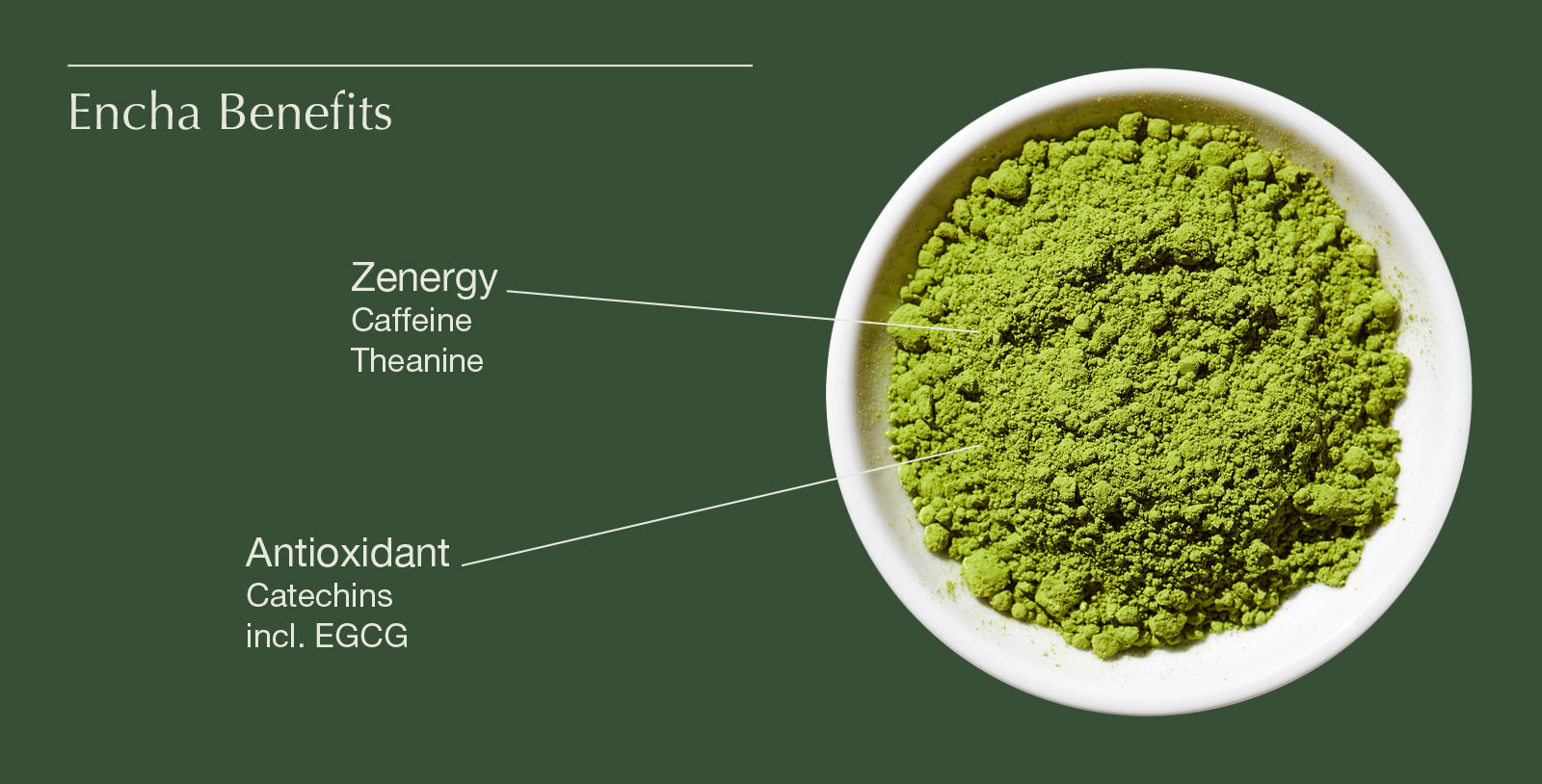
1. Matcha Zenergy from Theanine + Caffeine
The magical benefit in matcha is its unique combination of mentally calming theanine (L-theanine) and moderate caffeine. Theanine, also spelled as L-theanine, is an amino acid that helps induce alpha-frequency brain wave which is a state of wakeful calmness, as opposed to anxiety or drowsiness.
Many people feel mental alertness without jitter and longer mental focus without crash from drinking Encha. Coffee doesn’t contain theanine. That’s the key difference for matcha vs coffee. Regular tea leaves don’t have enough theanine because they didn’t go through shaded growth in the last 3 weeks before harvest.
When Encha organic matcha plants are shaded for about 3 weeks before harvest, the plants grow more theanine and caffeine.
Guide for Monitoring Zenergy from Drinking Encha Organic Matcha
Tea drinkers: Start each morning with a cup of Encha at breakfast. Try another serving after lunch if needed.
Light coffee drinkers (1-2 cups a day): Try replacing coffee with Encha for one week. Drink Encha when you would drink coffee.
Heavy coffee drinkers (3+ cups a day): Try replacing coffee with Encha for one week. You may experience withdrawal headache in the first few days.
Scientific Review of Matcha Benefits for Focus and Attention
A 2017 review article published in Phytomedicine analyzed 21 studies and identified positive associations between the combination of theanine and caffeine in green tea and such cognitive benefits as attention and memory, for example, activation of working memory revealed in functional MRI.
A 2017 study published in Food Research International had 23 participants drink matcha tea, eat matcha bar or had placebo tea or bar. Basic attention capabilities and psychomotor speed in stimulus response were improved with the intake of matcha compared to placebo groups. The effect was more evident after drinking matcha tea than eating a matcha bar.
A 2014 review article published in Nutrition Reviews analyzed data from 11 studies and showed that participants reported both the feeling of alertness and feeling of calmness after the intake of caffeine and theanine and performed more accurately in cognitive tasks of identifying or searching objects.
A 2009 study published in Brain Topography found that intake of L-theanine helped the participants sustain attention in a highly demanding visuo-spatial attention task.
A 2008 study published in Nutritional Neuroscience found that the combination of L-theanine and caffeine improved both speed and accuracy in participants’ attention-switching tasks.
2. Matcha Antioxidant Catechins (including EGCG)
Antioxidant is a general word describing the molecules that prevent free radicals from oxidating human cells. Oxidation underlies aging and many diseases including cancer. There are many kinds of antioxidants.
A powerful group of antioxidants, named Catechins, is abundant in natural green tea leaves, hence in whole-leaf ground-up matcha powder. The most active and abundant catechin is Epigallocatechin gallate (EGCG). All three grades of Encha Organic Matcha have the same amount of Catechins.
Guide for Monitoring Antioxidant and Anti-Inflammatory Benefits from Drinking Encha
Skin: Take weekly pictures of your face without any makeup in the same lighting. In 2-3 months after daily drinking of Encha, you might see smoother and brighter skin because antioxidant Catechins help reduce UV damage and are anti-inflammatory.
Metabolism: All other things equal, drinking Encha daily should stimulate metabolism and help weight management. Also do not skip breakfast when you drink your morning Encha because it stimulates your digestive system. Instead, go light on your dinner.
Immunity and disease prevention: Monitor your health measures and see how your general immunity and specific health measures might be improved.
Scientific Review of Matcha Antioxidant and Anti-inflammatory Benefits
Skin: A 2019 review article published in Nutrients identified that catechins helped reduce UV damage, increase the level of collagen and elastin fibers, and reduce the expression of collagen-degrading MMP-3 enzymes.
Skin: A 2013 study published in British Journal of Nutrition found after 12 weeks of intake of catechins, human skin showed catechin metabolites and one form of reduced damage from UV radiation.
Fat management: A 2018 article published in Nutrition Research conducted a pooled data analysis from six human trials of 921 participants. The analysis identified that after 12 weeks of daily intake of catechins, the participants’ abdominal fat area, visceral fat area and subcutaneous fat area were reduced. Their blood pressure improved.
Fat management: A 2007 article published in Journal of Nutritional Biochemistry identified from in vitro studies that catechins, particularly EGCG, inhibit the intestinal absorption of dietary lipids.
Cancer prevention or amelioration: A summary article on National Cancer Institute website provides a comprehensive reading. The antioxidant property of catechins may inhibit tumor cell proliferation. The article mentions that some studies “have linked tea consumption to reduced risks of cancers of the colon, breast, ovary, prostate, and lung”.
Heart disease prevention: A 2008 article in Current Medicinal Chemistry thoroughly reviewed epidemiological, clinical and experimental evidence. Catechins exert vascular protective effects through multiple mechanisms, including antioxidative, anti-hypertensive, anti-inflammatory, anti-proliferative, anti-thrombogenic, and lipid lowering effects (lowering LDL).
Anti-inflammatory effects: A 2017 study published in Toxicology and Applied Pharmacology found that catechins, specifically EGCG, effectively inhibited the production of pro-inflammatory neural mediators (IL-6 and IL-8), and expression of Cox-2 in primary human rheumatoid arthritis synovial fibroblasts.
Anti-inflammatory effects: A 2017 article published in Molecules identified multiple molecular mechanisms and neural pathways in which catechins inhibit excessive oxidative stress and exert anti-inflammatory effects, particularly in relation to the digestive system.
Information on Encha site and products is NOT medical advice. You should obtain medical advice from a licensed health care professional. If you experience any adverse effects from drinking Encha, you should stop right away. See Encha Terms and Conditions for full details.